

Mirror Laboratories: Uniting Researchers from Different Universities
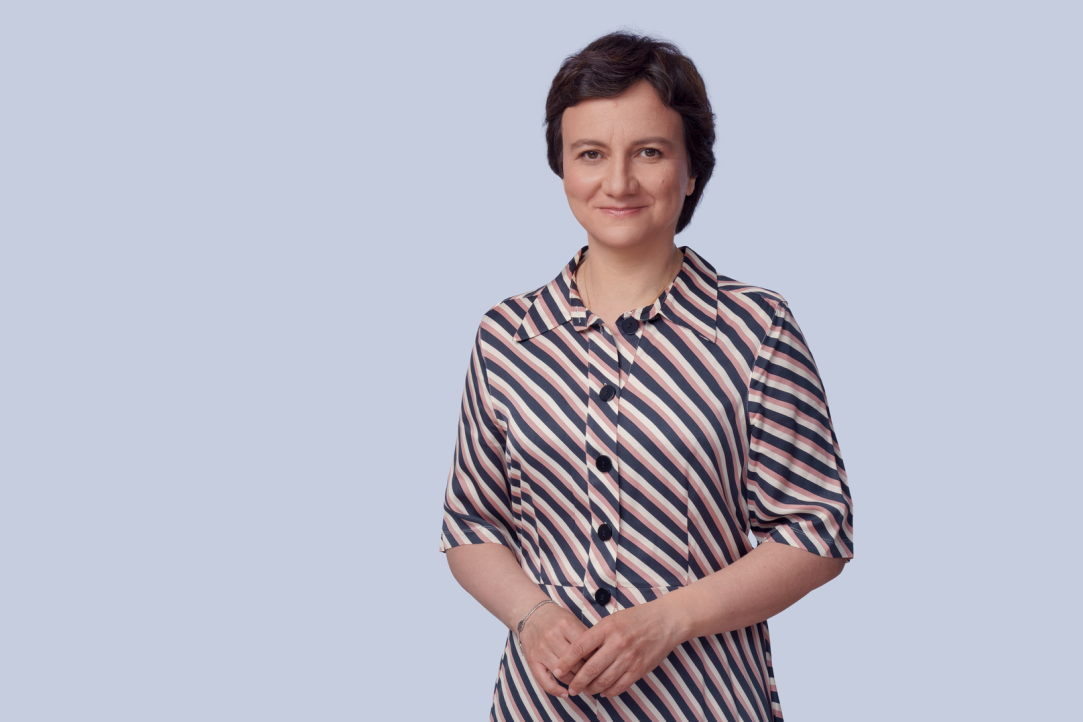
HSE Vice Rector Maria Yudkevich speaks about the launch of Mirror Laboratories, the third open project competition held by HSE University. Teams from Russian universities, research organisations, and government research centres looking to collaborate with HSE research departments are invited to participate in the competition. Applications will be accepted until May 20.
Mirror Laboratories are research projects implemented by HSE University in partnership with other Russian academic and research organisations. The idea of these projects is to bring together two teams of researchers working on a common topic and conducting similar research. HSE University research departments and those elsewhere in the country working in the same field and with a similar research agenda can apply to the competition as a team. If they win, they form a 'mirror project' in which both departments complement each other, share the same ideas, goals, objectives, etc. This is why they are called 'mirrors'—they are a reflection of each other. Such laboratories cooperate and receive funding for three years.
The Mirror Laboratories project has been conceived and organised as part of University Partnership, a larger project of HSE University. Apart from the Mirror Laboratories, the initiative covers many other important tools, including internships at HSE University and a programme for Russian postdoctoral fellows. However, the Mirror Laboratories project is the most ‘institutionalised’ event because it involves joint three-year research cooperation between existing HSE University departments and those in other universities selected as a result of the competition.
We run this competition every year. This year, we will be holding it for the third time. We will be accepting applications until May 20 and will announce the results on July 8. Full information about the competition is available on the HSE Mirror Laboratories website. We are trying to increase awareness of the competition as much as possible. When we announced the competition for the first time, we did not know that we would have to face a long period of pandemics and travel restrictions, so we thought we would meet with the participants in person and enjoy offline cooperation. However, these two years have shown that the laboratories can cooperate online equally well.
We are now expecting applications from people prepared to work remotely most of the time
Last year, we expanded the audience of the competition: in addition to applications from joint teams of HSE University and other Russian universities, we also began accepting joint applications from HSE University and research institutes. We hope that this year, we will have joint projects of HSE University and regional institutes of the Russian Academy of Sciences. One of the objectives of the Mirror Laboratories (as well as many of the projects we run on a competitive basis) is to create a research school and foster young scientists. Therefore, mutual internships, summer schools, tours of regional and Moscow universities, and similar events have always been an important part of the Mirror Laboratories.
Future researchers will certainly benefit from opportunities to work with other universities and research institutes
Thirty-three research projects took part in the first Mirror Laboratories competition in 2020. Applications were filed jointly by HSE research departments and 27 Russian partner universities. There were thirteen winning projects. In the 2021 competition, 32 applications were submitted jointly with 25 Russian universities and research centres, with ten projects named the winners.

Last year, we received more than three applications per vacancy. We expect applications to be fairly detailed, so it takes a long time for our colleagues to prepare, discuss, and work out the details. Applying to our competition takes a lot of work. We are always faced with a difficult choice. We see how many of our colleagues learn from their mistakes. Sometimes, we receive an application that we are potentially interested in, but we do not support it because it is not developed enough. Next time, we receive the same application and see that the applicants have been working for a whole year and have managed to make a more substantial application despite a lack of centralised support. In 2020, during the first wave of the competition, we rejected some applications, but in 2021, our colleagues submitted a revised version that we were happy to support.
It should be noted that the most sustainable projects arise when applicants make the most of a history of productive relations, and this background enables them to take the project to the next level
Firstly, it is important to us that projects have practical applications and are of interest to both parties involved. Secondly, the parties need to invest valuable competencies in the project and learn something from each other. This is important because we do not want people to think that everyone should learn from HSE University and that our university always acts as a ‘big brother’. This is not the case. Many projects are implemented by collaborative efforts from both sides—twice the expertise is invested, and we both learn from each other. Thirdly, it is desirable that some intellectual property be created as part of the laboratory work, not only in the form of publications, but also in the form of databases, patents, and practical developments.
We have a number of projects that focus on solving specific regional problems
For example, the HSE Vishnevsky Institute of Demography and the Laboratory for Social and Demographic Research at Bashkir State University study the impact of demographic changes on human development in Russian regions and develop recommendations for optimising regional demographic and social policy, aimed at achieving Russia’s national development goals.
Another example is the collaboration between the HSE Institute for Economics and Regulation of Natural Monopolies and the International Laboratory for Regional Problems of Energy Development at the Irkutsk National Research Technical University. The team is developing energy infrastructure models for remote and isolated Russian territories that lack connections to centralised electricity grids and heat supply systems. This is the case for about 80% of territories in Russia.

Maria M. Yudkevich
See also:

Electronics of the Future: Why Superconductors and Spintronics Work Together
It was once believed that superconductivity and magnetism avoided each other like the devil avoids holy water. However, modern nanostructures prove the opposite. A Russian theoretical physicist and Indian experimentalists have joined forces to create the electronics of the future—free from energy losses. Nataliya Pugach, Professor at the School of Electronic Engineering at HSE MIEM and Leading Research Fellow at the Quantum Nanoelectronics Laboratory, explains how a long-standing acquaintance in Cambridge grew into a mirror laboratory project with the Indian Institute of Technology Bombay (IIT Bombay), how superconducting spintronics works, and what surprises a researcher in India beyond the university campus.
HSE University Installs Geoscan Station at IIT Bombay
A Russian ground station for receiving SONIKS satellite data has been installed on the campus of the Indian Institute of Technology Bombay (IIT Bombay). Developed by Geoscan, the system will become part of a mirror laboratory project run jointly by HSE University and one of India’s leading universities.
HSE Physicists Propose Unified Theory for Describing Electric Double Layer
To develop more efficient batteries and catalysts, it is essential to understand the processes occurring at the metal–solution interface in the electric double layer (EDL). Physicists at HSE MIEM have proposed a unified theoretical model of the EDL that simultaneously accounts for selective adsorption of ions on the surface and partial charge transfer between ions and the metal—phenomena that had previously been described separately. The model’s predictions are consistent with experimental data. In the future, it may be used in the development of batteries, supercapacitors, and catalysts. The study has been published in Electrochimica Acta.
'Our Research Is Primarily Focused on Developing Lasers as Carriers of Information'
The International Laboratory of Quantum Optoelectronics at HSE University–St Petersburg develops semiconductor microlasers. The components and systems created by the laboratory also enable high-speed data transmission and processing. Natalia Kryzhanovskaya, Head of the Laboratory and Doctor of Sciences in Physics and Mathematics, spoke with the HSE News Service about the laboratory’s research areas and future prospects.
HSE to Launch Laboratories in Space Research and Nanoelectronics with One of India’s Top Universities
Scientists from the HSE University and the Indian Institute of Technology Bombay (IIT Bombay) will carry out joint research in the storage, transmission, and processing of data in space systems. A second major project will be a laboratory for superconducting spintronics—a promising field in modern nanoelectronics.
HSE and UTM Present Results of Mirror Laboratory's Work at Russian–Malaysian Commission
HSE University–St Petersburg and the Universiti Teknologi Malaysia (UTM) presented the results of two years of work and a development roadmap for the mirror laboratory on social entrepreneurship. The document outlines the strategy for global transformation in the business and digital innovation sphere.
'We View Mathematics as a Universal Language for Natural Sciences, Economics, and Computer Science'
The Laboratory for Geometric Algebra and Applications at the HSE Faculty of Economic Sciences is developing a universal language for mathematics, physics, and other exact and natural sciences. It is creating computational methods that are applied in geometry, physics, machine learning, engineering, computer science, and other fields. The laboratory’s staff, including doctoral students, have published numerous articles in leading scientific journals and have taken part in major international conferences. Dmitry Shirokov, Head of the Laboratory, spoke with the HSE News Service about their work.
HSE Researchers Introduce Novel Symmetry-Aware Neural Network Architecture
Researchers at the HSE Laboratory for Geometric Algebra and Applications have developed a new neural network architecture that can accelerate and streamline data analysis in physics, biology, and engineering. The scientists presented their solution on July 16 in Vancouver at ICML 2025, one of the world's leading conferences on machine learning. Both the paper and the source code are publicly available.
'Biotech Is Booming Worldwide'
For more than five years, the International Laboratory of Bioinformatics at the HSE Faculty of Computer Science has been advancing cutting-edge research. During this time, its scientists have achieved major breakthroughs, including the development of CARDIOLIFE—a unique genetic test unmatched worldwide that predicts the likelihood of cardiovascular disease. With the active participation of HSE students, including doctoral students, the team is also working on a new generation of medicines. In this interview with the HSE News Service, Laboratory Head Maria Poptsova shares insights into their work.
'Samarkand—St Petersburg': HSE University–St Petersburg and Samarkand State University to Design Digital Future of Cultural Heritage
Samarkand State University named after Sharof Rashidov hosted the international research and educational seminar 'Branding Cultural Heritage: Digital Tools and Design Practices.' The event gathered researchers and students from Russia and Uzbekistan—participants of a large-scale project of the mirror laboratory 'Integrated Platform Solutions for the Preservation and Promotion of Cultural Heritage (Cases of Samarkand and St Petersburg)'.