

Maxim Reshetnikov: ‘An Effective Open Market Economy Has Been Built in Russia’
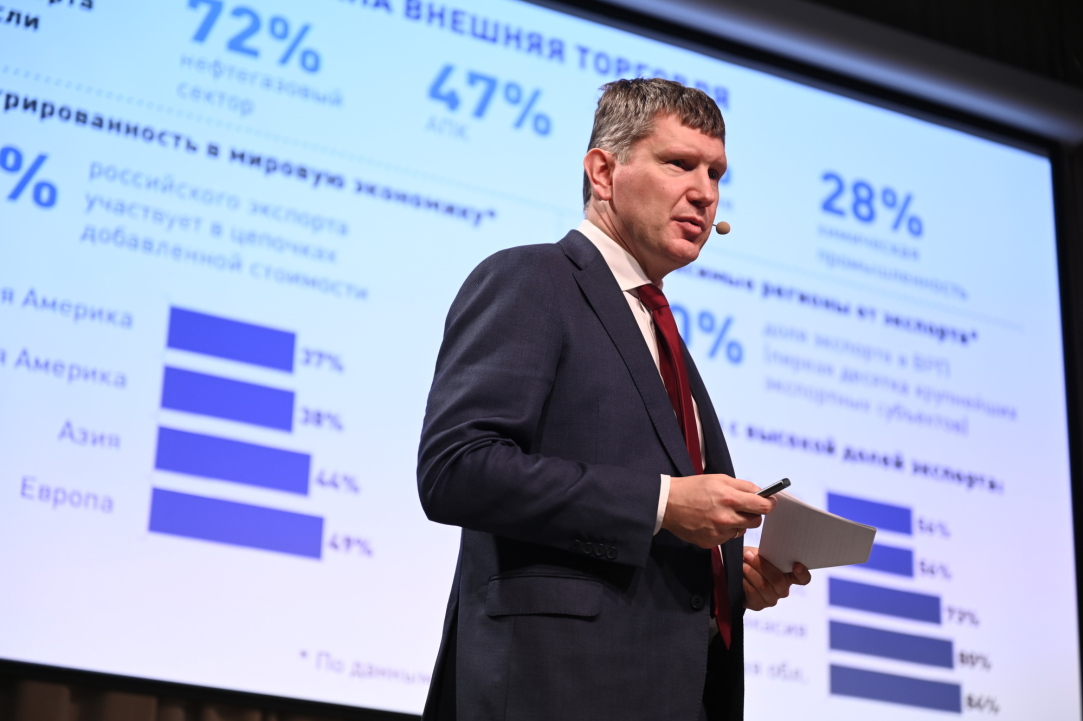
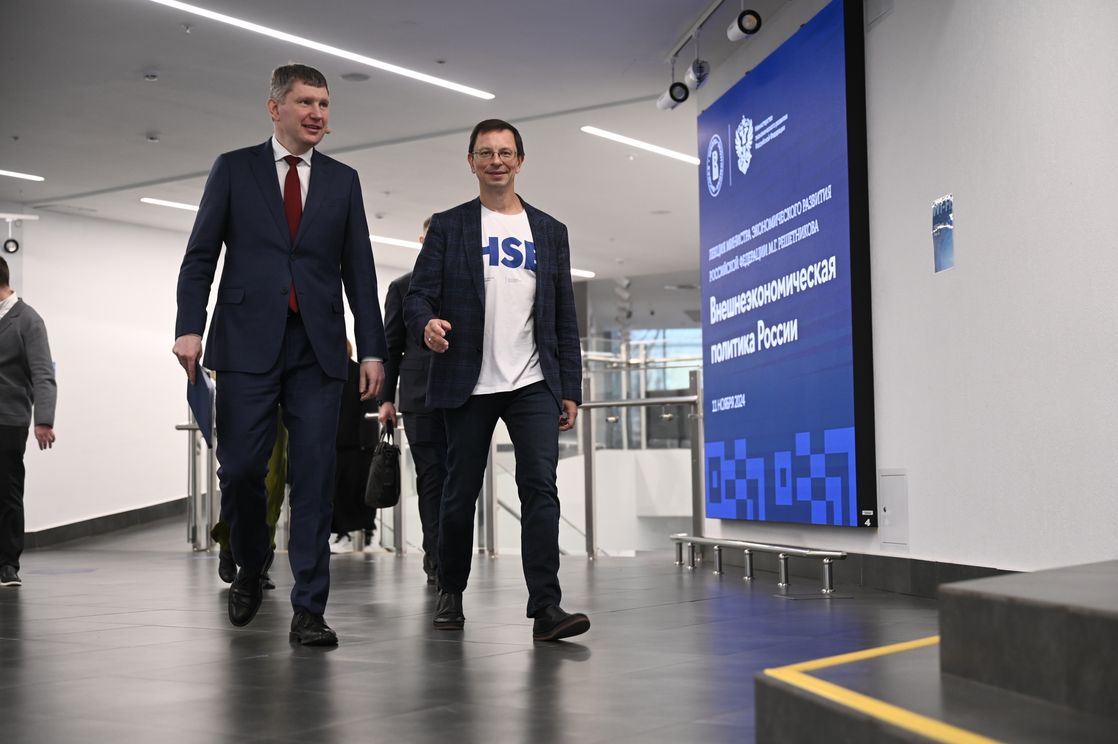
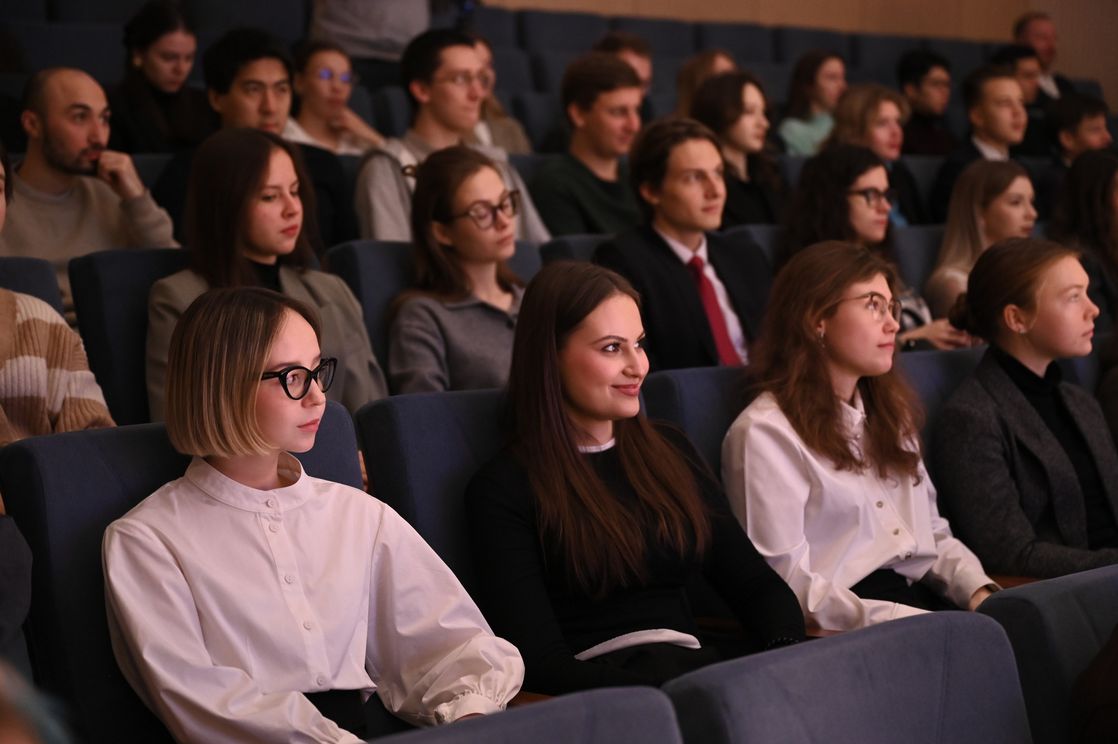
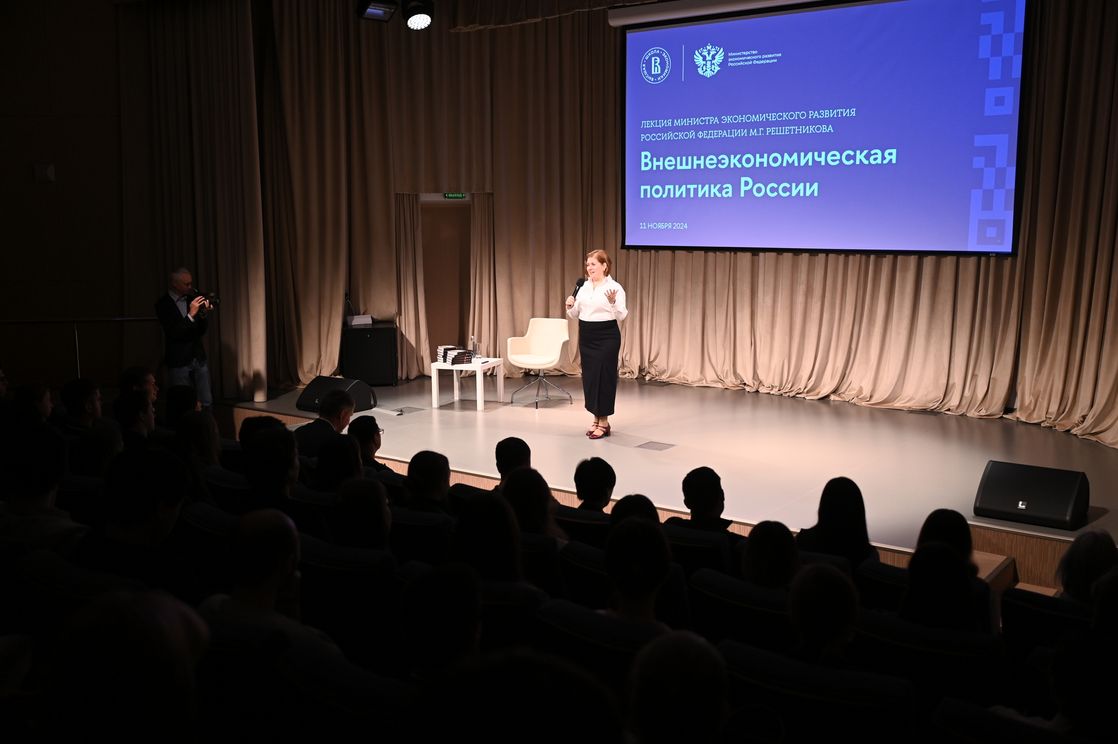
On November 11, 2024, during Economist Day in Russia, Maxim Reshetnikov, Russian Minister of Economic Development, spoke to students of the HSE Faculty of World Economy and International Affairs about Russia’s foreign economic activities, how the country managed to withstand unprecedented sanctions pressure, and the current state of its development.
The meeting was opened by HSE University Rector Nikita Anisimov. He congratulated everyone on their professional holiday, Economist Day, and emphasised that the event would not be a lecture, but rather a strategic vision of how the country is evolving. According to him, the primary focus of the government and HSE, as a governmental university, is human-centric development aimed at enhancing the well-being of every individual.
Maxim Reshetnikov thanked the Rector for his warm introduction and extended his best wishes on the holiday: ‘I have been involved in economics for many years and I have never been disappointed. For me, economics is the search for a complex balance where resources are limited and needs are unlimited.’ Addressing the students, he also pointed out that the gap between listening to someone in an auditorium and speaking in front of one, being responsible for a complex area of work, is often bridged quickly in life.

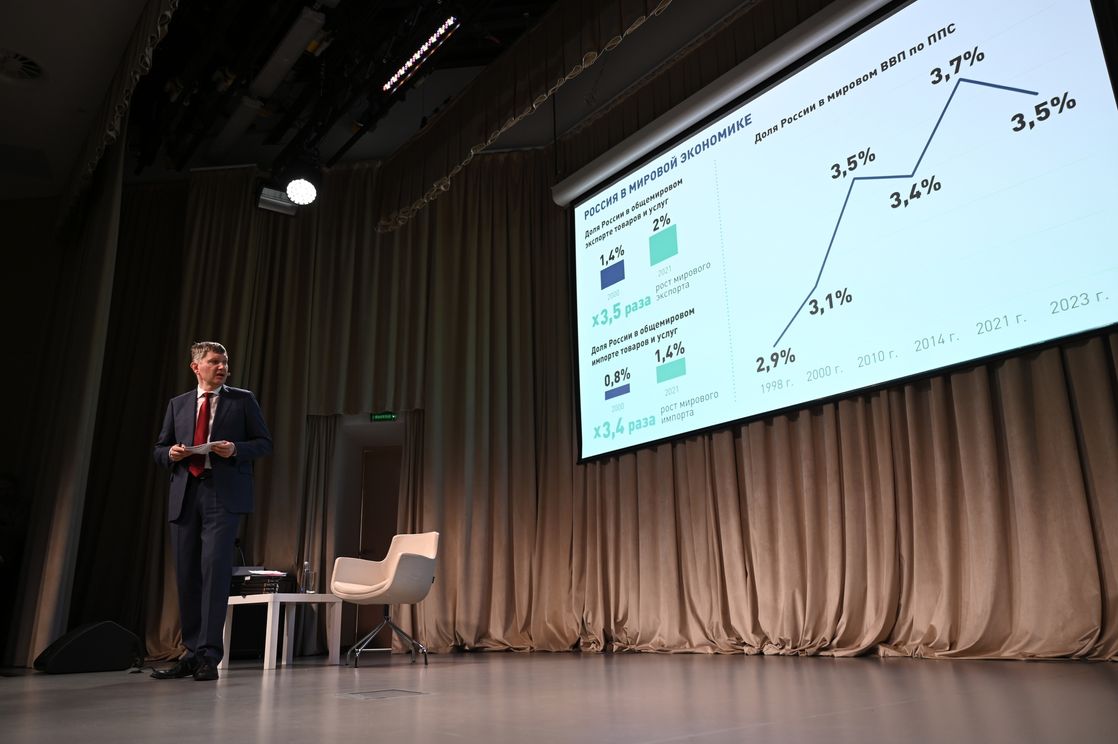
Russia is the fourth largest economy among the world's top ten economies, noted the minister at the beginning of his speech. The national economy is integrated with the global market and part of global value chains, with many sectors export-oriented: the oil and gas industry, agriculture, fertiliser production, metallurgy, and the chemical sector. Russia plays a significant role in the global economy, leading in the supply of several goods and acting as a key trading partner for many countries. The structure of exports is changing, with an increase in the production of high-value-added goods. ‘Last year, for example, Russian companies delivered high-tech products to 154 countries. We are diversifying our exports, and many small enterprises have entered the export market,’ Maxim Reshetnikov emphasised. In the early 2000s, Russia was ranked 17th in the world by export volume; now, it is 13th, with its contribution to global GDP rising from 2.9% to 3.5%.
Maxim Reshetnikov highlighted that despite the number of sanctions imposed on Russia being several times greater than those on Iran, the situation remains stable. Russia is experiencing significant economic growth and exceeding global averages. According to the Russian Ministry of Economic Development's forecasts, GDP will grow by 3.9% by the end of 2024.
This has been achieved thanks to the fact that over the past 25 years, an effective, open, and competitive market economy has developed in Russia. ‘Such statements are rarely made, as we are always focused on challenges. But looking back, we have come a long way. Our entrepreneurs have created highly effective companies that compete successfully in the global market,’ Maxim Reshetnikov stated confidently.
Russian businesses managed to quickly restructure logistics, trade, production, and technological chains. ‘We were heavily reliant on the West technologically. But having strong engineering services that understood all processes allowed us to adapt quickly,’ said the minister. ‘Without effective management and entrepreneurship, this would not have been possible. They are the ones who made it happen,’ he stressed. It is necessary to respond to external pressures by expanding internal entrepreneurial freedom.
Today, as a result of the restructuring and reorientation of foreign economic activities, 85% of exports go to friendly countries, and most transactions are conducted in roubles and national currencies, while the share of the dollar and euro has decreased several times. The current goal is to build a network of partnerships with friendly countries, including creating an investment-settlement platform within BRICS, as recently discussed by President Vladimir Putin. One of the priority regions for developing foreign economic activities, according to the Minister, is Africa, which holds significant opportunities for exporting educational services and products.
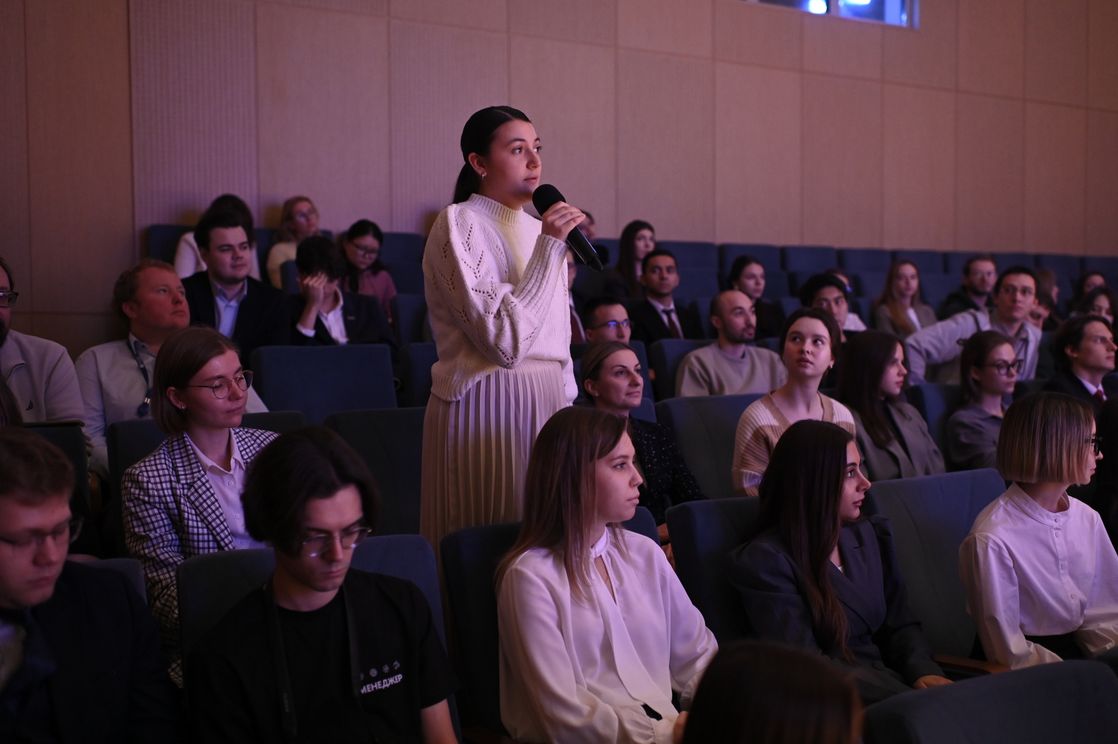
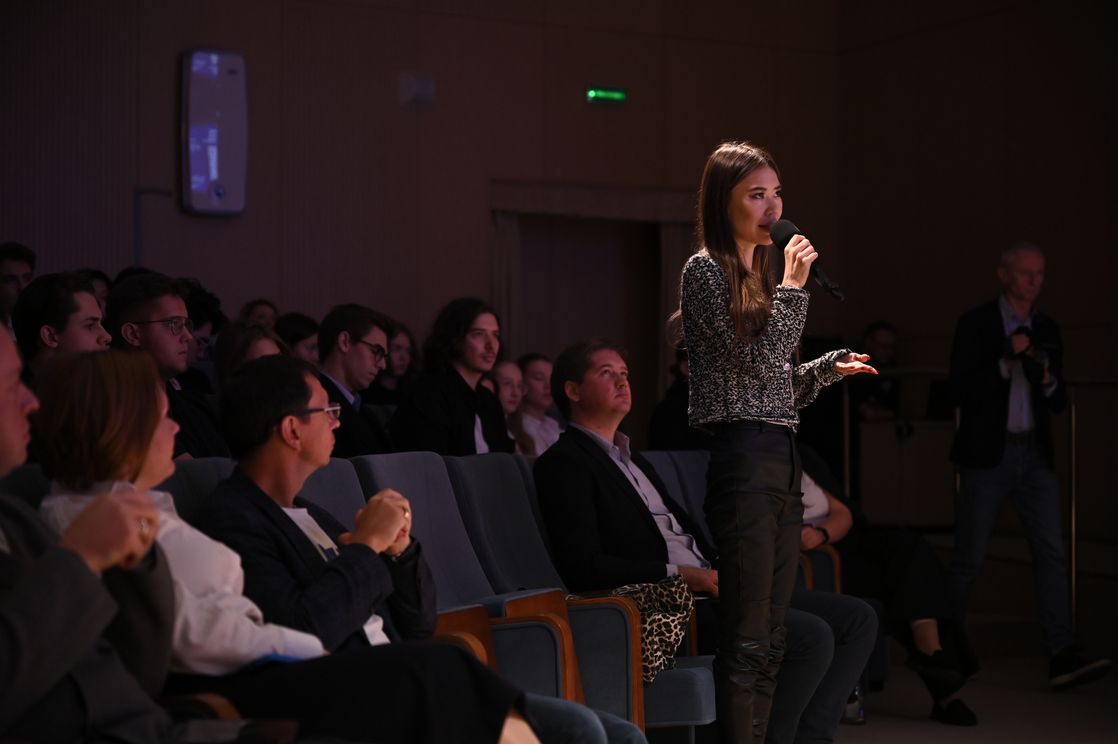
After the lecture, Maxim Reshetnikov answered students' questions. They asked him about global economic development scenarios, cooperation within the Eurasian Economic Union, the opportunities and risks of the economic situation in their country, prospects for entrepreneurship, sustainable development, WTO cooperation, issues related to single-industry towns, and other topics.

See also:

Experiments in Economics
Why simulate an auction? How do experiments in economics differ from those in psychology? Assistant Professor Alexander Usvitskiy, Head of the Laboratory for Experimental Economics and Finance, discusses the laboratory's activities and research approaches.
When Circumstances Are Stronger Than Habits: How Financial Stress Affects Smoking Cessation
HSE researchers have found that the likelihood of quitting smoking rises with increasing financial struggles. While low levels of financial difficulties do not affect smoking behaviour, moderate financial stress can increase the probability of quitting by 13% to 21%. Responses to high financial stress differ by gender: men are almost 1.5 times more likely to give up cigarettes than under normal conditions, whereas no significant effect is observed on women’s decisions to quit smoking. These conclusions are based on data from the Russia Longitudinal Monitoring Survey (RLMS-HSE) for 2000–2023 and have been published in Monitoring of Public Opinion: Economic and Social Changes.
‘Sometimes a Student’s Question Will Spark a New Angle on a Problem I’ve Been Working on’
Nicolas Lagios joined the International College of Economics and Finance (ICEF) at HSE University–Moscow as an assistant professor in 2025. He holds a Master’s and a PhD in Economics and his research interests include political economy, cultural economics, and applied economics. In this interview, Nicolas talks about the qualities that make HSE students exceptional, the overlap between organisational psychology and his research, and why Moscow strikes the ideal work–life balance.
AI Overestimates How Smart People Are, According to HSE Economists
Scientists at HSE University have found that current AI models, including ChatGPT and Claude, tend to overestimate the rationality of their human opponents—whether first-year undergraduate students or experienced scientists—in strategic thinking games, such as the Keynesian beauty contest. While these models attempt to predict human behaviour, they often end up playing 'too smart' and losing because they assume a higher level of logic in people than is actually present. The study has been published in the Journal of Economic Behavior & Organization.
Banking Crises Drive Biodiversity Loss
Economists from HSE University, MGIMO University, and Bocconi University have found that financial crises have a significant negative impact on biodiversity and the environment. This relationship appears to be bi-directional: as global biodiversity declines, the likelihood of new crises increases. The study examines the status of populations encompassing thousands of species worldwide over the past 50 years. The article has been published in Economics Letters, an international journal.
‘Teaching Is a Learning Experience for Me—Every Question Is an Opportunity to Update My Lecture Material’
Kemal Kivanc Akoz is an Assistant Professor of the Department of Theoretical Economics at the Faculty of Economic Sciences. He has been at HSE University for six years and his current activities include research into marriage market dynamics and information agreements among groups of agents. In this interview with the HSE News Service, Kemal talks about the subjects of his research, the teaching approach that led to him being named one of the university’s Best Teachers, his favourite places to get a coffee in Moscow, and more.
‘I Hope You Have Entered the Economic Profession Consciously’
On November 11, 2024, the HSE Faculty of Economic Sciences hosted a celebration for Economist Day. Many of the university's partners came to congratulate HSE on the occasion. The atrium on Pokrovsky Bulvar hosted booths from VkusVill, Ozon, HeadHunter, Wildberries, and other leading companies. Students and professors participated in quizzes, spun the wheel of fortune, painted, and crafted.
FES Announces the Winner of the Nobel Prize in Economics 2024 Prediction Contest
The HSE Faculty of Economic Sciences summarised the results of its traditional prediction contest. FES holds this contest annually on the eve of Nobel Week. This year, the contest once again attracted participants from different regions of Russia and countries around the world. Remarkably, one participant managed to predict all three laureates of the 2024 Economics Prize.
Try Your Hand at Predicting the 2024 Nobel Prize Winner in Economics
The Faculty of Economic Sciences is launching its annual prediction contest. On October 14, the Nobel Committee will announce the winners of the Sveriges Riksbank Alfred Nobel Prize in Economic Sciences live on air. You have time to prepare and explore the landscape of contemporary economic thought. What topics and areas are considered particularly important and promising at the moment? Anyone can win.
Choosing the Right Server Results in Better Outcomes in Doubles Tennis
The Roland Garros tennis tournament, one of the most prestigious in the world, began on May 26. The prize money for this year's French Open totals nearly 54 million euros, with athletes competing in both singles and doubles events. In doubles tennis, choosing the right strategy for a match is crucial. Athletes' ability to adapt to the dynamics of the match and strategically choose the server can earn the pair up to 5% more points, according to Nikolai Avkhimovich, doctoral student and research fellow at the Laboratory of Sports Studies of the HSE Faculty of Economic Sciences. A paper with the study findings has been published in Applied Economics.